
The Real Persecution Behind the American Pilgrims’ Flight
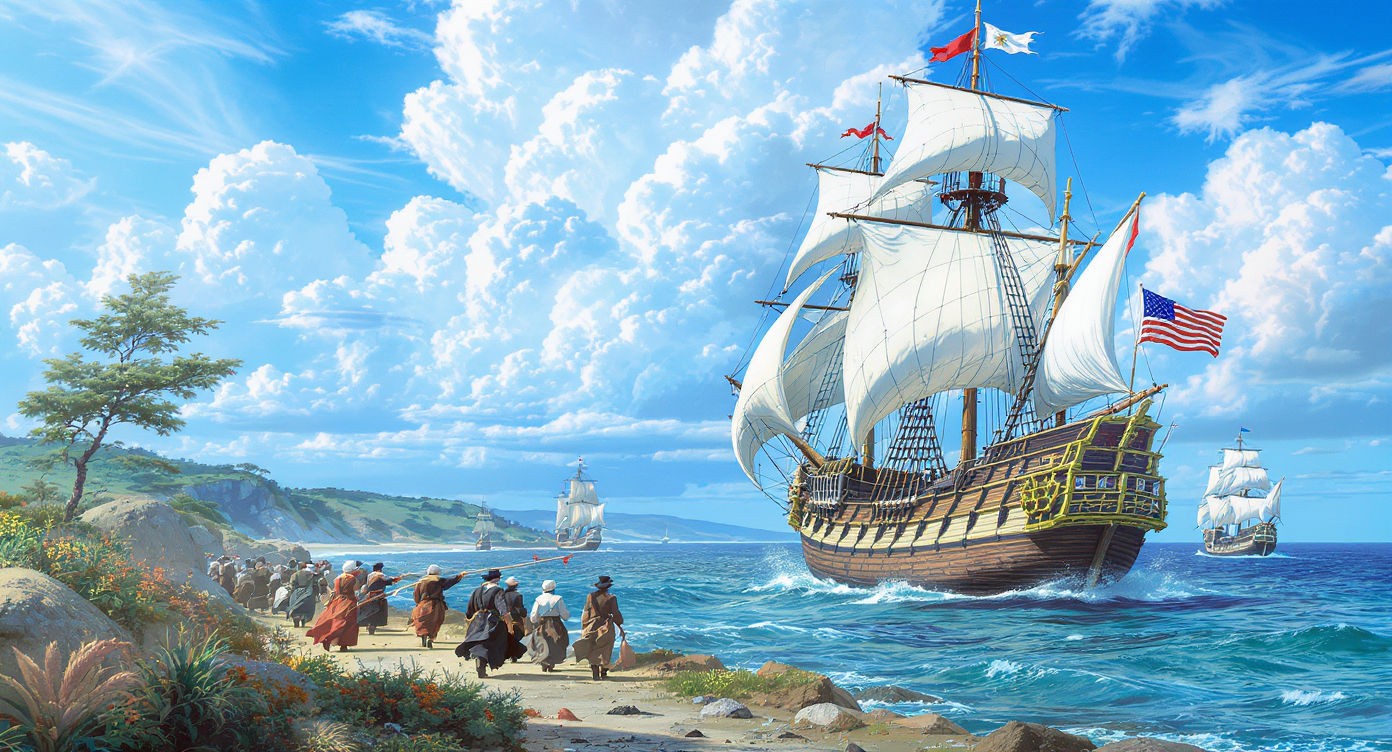
It’s one of the most familiar stories in American history: the Pilgrims, a group of devout Christians, flee persecution in the Old World to build a new society based on religious freedom in the New World. It’s a foundational narrative, but like many historical tales, the devil is in the details. A common misconception is that these early settlers were fleeing the Catholic Church. While the fear of Catholicism was certainly a powerful motivator, the reality of who was persecuting them, and why, is more nuanced and reveals a great deal about the religious and political tensions that shaped America.
The Persecutors Weren’t Who You Think
To understand the Pilgrims, we must first understand the Church of England. It was not, as many assume, a branch of the Catholic Church. It was a Protestant institution born in the 1530s when King Henry VIII, in a dispute over his marriage, broke England away from the authority of the Pope in Rome. The new church, with the English monarch as its head, charted a “middle way” between Roman Catholicism and the more radical Protestant movements flourishing in Europe.
This “middle way” was precisely the problem. The Church of England kept the elaborate hierarchy of bishops and archbishops and many of the traditional rituals and ceremonies found in its Catholic predecessor. For many English Christians, this was not a true reformation.
The groups who would become America’s first settlers were radical Protestants who found this compromise unacceptable. They fell into two main camps:
- The Puritans: These were non-separating Calvinists who wished to “purify” the Church of England from within. They did not want to leave the church but wanted to strip it of all vestiges of “popery”—its bishops, formal prayer books, ornate vestments, and elaborate ceremonies. They believed in a simpler, more direct, and scripture-based form of worship.
- The Pilgrims (or Separatists): This was a more radical faction. They believed the Church of England was so corrupt and hopelessly entangled in Catholic tradition that it was beyond saving. Their conscience demanded they separate from it completely.
This act of separation was illegal and considered seditious. The persecutors of the Pilgrims and Puritans were not Catholic inquisitors, but the agents of the English Crown and the hierarchy of the Church of England itself. Kings James I and Charles I, along with powerful figures like Archbishop William Laud, demanded religious uniformity as a cornerstone of political stability. Those who refused to attend Church of England services or held their own unauthorized religious meetings faced fines, harassment, imprisonment, and worse. The Pilgrims were a hunted minority, and the Puritans were an increasingly pressured and marginalized group facing an uncertain future under a king who demanded conformity.
Why the Intense Fear of Catholicism?
So, if they weren’t being persecuted by Catholics, why were they so terrified of them? This is where the story becomes more complex. The Puritans and Pilgrims were not fleeing from Catholic persecution, but they were absolutely driven by a profound fear of Catholic power.
This fear was rooted in history and theology:
- A Bloody Past: English Protestants had a collective memory of the “Marian Persecutions” of the 1550s, when the Catholic Queen Mary I (“Bloody Mary”) had burned nearly 300 Protestants at the stake. This created a deep-seated, cultural terror of Catholicism as a persecuting, tyrannical force.
- Theological Demonization: In the Protestant worldview of the 17th century, the Pope was not merely a rival religious leader. He was often identified as the Antichrist, and the Catholic Church was seen as the “Whore of Babylon” described in the Book of Revelation—a vast, corrupt institution dedicated to destroying true faith and enslaving mankind.
For these radical Protestants, the Church of England’s retention of Catholic-style rituals wasn’t just a harmless preference; it was evidence of a dangerous compromise that left the door open for a full-blown Catholic takeover. They saw themselves as God’s elect, fleeing a compromised church and a potentially tyrannical king to build a purified society in the wilderness, safe from the perceived corruption of Rome.
Bringing the Fears to the New World
This powerful fear of Catholicism did not stay behind in England. It crossed the Atlantic and became a dominant force in colonial politics and law for over 150 years. The colonists were determined to build a society where the “tyranny” of Catholicism could never take root.
This led to widespread and systematic discrimination against Catholics:
- Legal Barriers: Many colonies passed laws specifically targeting Catholics. In Puritan Massachusetts, the mere presence of a Catholic priest was a capital offense. In other colonies, Catholics were barred from voting, holding public office, owning land, practicing law, and even serving in the militia.
- The Protestant Revolution in Maryland: Ironically, Maryland was founded in 1634 as a haven for English Catholics. However, it was quickly overwhelmed by Protestant settlers. In 1689, these settlers, fueled by the same anti-Catholic fears, overthrew the colony’s Catholic leadership in the “Protestant Revolution” and immediately enacted laws stripping Catholics of their rights.
- Fuel for the American Revolution: Anti-Catholic sentiment was a powerful tool used to rally colonists against the British Crown. When Parliament passed the Quebec Act in 1774, which granted religious freedom to Catholics in Quebec, patriot leaders like Samuel Adams and Paul Revere spun it as a sinister conspiracy. They printed pamphlets and gave speeches claiming it was a “Popish Plot” by King George III and the Pope to impose Catholicism and the Inquisition on America. This act was listed as one of the “Intolerable Acts” that pushed the colonies toward rebellion.
Conclusion: A More Accurate Foundation
The story of America’s founding is not a simple tale of fleeing the Catholic Church. It is a more complex story of radical Protestants fleeing persecution from a state Protestant church, while being driven by a deep-seated fear of the Catholic Church as a political and spiritual enemy.
This fear, born in the religious wars of Europe, became a cornerstone of American identity. It shaped the laws of the new colonies and was later used to fuel the fire of revolution. Understanding this distinction is crucial. It reveals that the quest for “religious freedom” in early America was often a very specific quest: the freedom to establish a purified, Protestant society and the fervent determination to prevent any other faith, particularly Catholicism, from ever gaining the power to persecute them again. It’s a less tidy story, but one that is far more true to the complex, and often contradictory, ideals that gave birth to a nation.